NVIDIA AI chips have become a cornerstone in the advancement of cloud AI services and scalable computing, offering transformative benefits that are revolutionizing how businesses and developers harness artificial intelligence at scale. These chips, specifically designed to accelerate AI workloads, provide the raw computational power and efficiency required to process vast amounts of data quickly and accurately in cloud environments. One of the primary benefits of NVIDIA AI chips in cloud AI services is their unparalleled performance in handling complex AI models, such as deep learning neural networks, which are essential for tasks like natural language processing, image recognition, and recommendation systems. Their architecture, built around parallel processing capabilities and optimized for matrix calculations, enables faster training and inference times compared to traditional CPUs. This acceleration is critical in cloud environments where users demand real-time or near-real-time responses from AI-powered applications. Cloud providers can deploy these chips across thousands of servers to build large-scale AI infrastructures capable of supporting multiple users and applications simultaneously.
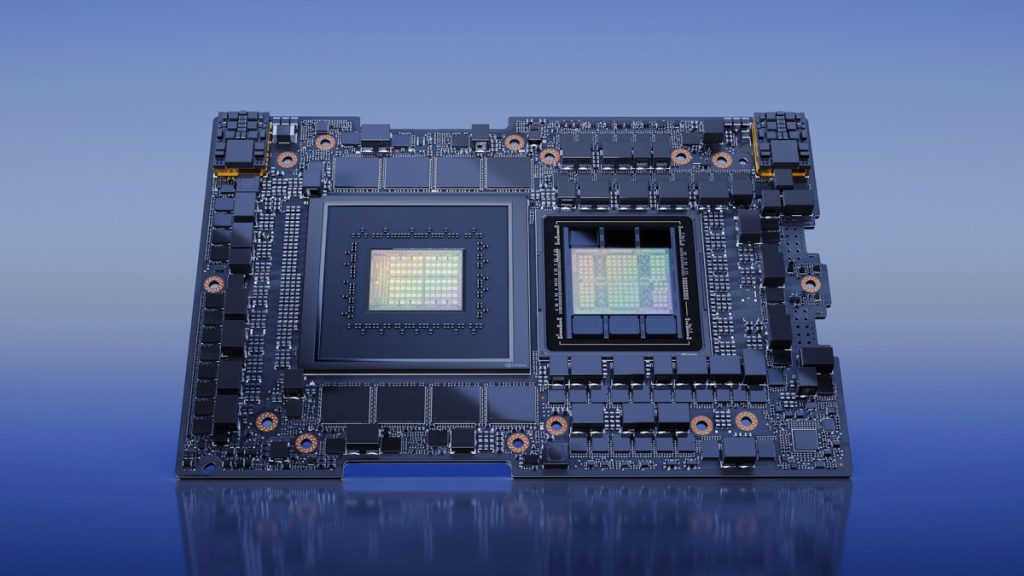
This scalability ensures that AI services can grow dynamically with user demand without compromising performance or reliability. By leveraging NVIDIA’s ecosystem, including software frameworks like CUDA and TensorRT, developers can optimize AI models to run efficiently on these chips, further enhancing performance and resource utilization. This synergy between hardware and software reduces operational costs and energy consumption, making cloud AI services more sustainable and cost-effective. Another vital benefit of NVIDIA AI chips is their support for a wide range of AI workloads beyond just deep learning. They enable cloud providers to offer diverse AI services, including machine learning, data analytics, and edge AI processing. This flexibility allows businesses to adopt AI in various domains, from autonomous vehicles and healthcare diagnostics to financial modeling and cybersecurity. NVIDIA’s continuous innovation ensures that their AI chips stay at the forefront of technological advances, incorporating features such as tensor cores specialized for AI computation, enhanced memory bandwidth, and multi-instance GPU capabilities that allow multiple isolated AI tasks to run concurrently on a single chip. These advancements empower cloud providers to maximize throughput and efficiency while maintaining strict security and privacy controls.
By providing powerful yet accessible AI computing resources, these chips democratize AI development, allowing startups, researchers, and enterprises to experiment, iterate, and deploy AI solutions without the need for expensive on-premises hardware. This accessibility accelerates the pace of AI innovation, resulting in quicker deployment of AI applications that address real-world problems and improve user experiences. Additionally, NVIDIA’s robust software support and developer tools foster a thriving ecosystem that simplifies AI development and deployment in the cloud, reducing the time to market for new AI-driven products and services. NVIDIA AI chips offer a combination of high performance, scalability, versatility, and energy efficiency that is instrumental in empowering cloud AI services and scalable computing infrastructures. Their ability to accelerate complex AI workloads, support diverse applications, and integrate seamlessly with advanced software tools makes them an indispensable asset for cloud providers aiming to deliver powerful, reliable, and cost-effective AI solutions. As AI continues to permeate various industries, the role of nvidia ai chip in enabling cloud AI services will only grow, driving innovation and transforming how organizations leverage artificial intelligence to gain competitive advantages and create value at scale.